
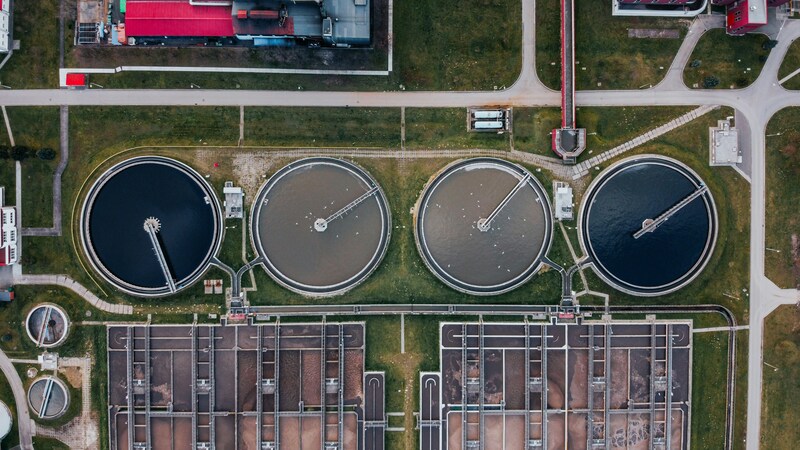
This technical guide describes the main wastewater generation sources in pharmaceutical facilities, contaminants usually present, control parameters used for their characterization and treatment technologies used to ensure compliance with applicable regulatory and environmental requirements.
Likewise, current trends in terms of sustainability, reuse of water and elimination of emerging contaminants.
1 The importance of water management in pharmaceutical facilities
Water constitutes a utility critical in the pharmaceutical industry and is present in most productive and auxiliary operations. It is used in manufacturing processes, cleaning of equipment and facilities, service generation industrial, quality control laboratories and research and development activities.
As a consequence of these operations, different wastewater streams are generated with variable physicochemical and biological characteristics, whose treatment is necessary to ensure compliance with discharge requirements, the protection of the receiving environment and the facility sustainability.
The proper management of these currents requires correct identification of generation sources, a representative analytical characterization and the selection of treatment technologies adapted to the nature of the contaminants present.
2 Identification and classification of waste streams in pharmaceutical facilities
The wastewater generated in a pharmaceutical facility comes from both production processes and auxiliary and support activities. Its composition and contaminant load can vary significantly depending on of the type of product manufactured, the technology used, las cleaning operations and the utility systems associates.
The identification and segregation of these currents constitutes a fundamental stage for the design and operation of treatment systems, since it allows the most appropriate technologies to be selected and effluent management to be optimized.
Among the main sources stand out:
| Washing equipment and systems | Cleaning operations represent one of the largest contributions to the total volume of wastewater. Manual or CIP cleaning processes (Clean-In-Place) generate currents that may contain:
|
| Production processes | During manufacturing, spills may occur associated with:
|
| Quality control and R&D laboratories | Analytical activities can generate water contaminated with:
In many cases, these streams require differentiated management and are not sent directly to the biological treatment plant. |
| Auxiliary systems and utilities | Other common sources include:
|
3 What contaminants may they contain?
The composition of pharmaceutical wastewater can vary significantly depending on the type of activity carried out. However, the most common contaminants can be classified into three large groups:
| Physical contaminants | Chemical contaminants | Biological contaminants |
| · Solids in suspension.
· Sediments. · Turbidity. · Particles from raw materials or processes. |
· Biodegradable organic matter.
· Active pharmaceutical ingredients. · Detergents and surfactants. · Cleaning and disinfection products. · Nutrients such as nitrogen and phosphorus. · Dissolved salts and inorganic compounds. |
· Bacteria.
· Yeasts. · Biomass from biotechnological processes. |
4 Characterization and control parameters of pharmaceutical wastewater
The analytical characterization of wastewater constitutes the basis for design, sizing and operation of treatment systems. The control parameters make it possible to quantify the contaminant load of the effluent, evaluate its biodegradability, verify the performance of the wastewater treatment plant (WWTP) and demonstrate compliance with the applicable discharge limits.
4.1 Organic loading parameters
4.1.1 COD (Chemical Oxygen Demand)
COD measures the amount of oxygen necessary to chemically oxidize the organic matter present in water.
This parameter is usually used to:
- Evaluate organic contamination.
- Sizing treatment facilities.
- Control the performance of a WWTP.
- Verify compliance with discharge limits.
How much the higher the COD value, the greater the polluting load and, therefore, the more demanding the treatment required will be.
4.1.2 BOD₅ (Biological Oxygen Demand)
BOD₅ quantifies the oxygen consumed by microorganisms during the biological degradation of organic matter over a period of five days.
Its main application is to evaluate the biodegradable fraction of the effluent.
The BOD₅/COD ratio constitutes a fundamental indicator for selecting biological treatment technologies and estimating the biodegradation potential of the waste stream.
4.2 Solid matter parameters
4.2.1 Total Suspended Solids (TSS)
The TSS represents the concentration of suspended particles present in the wastewater. Its control is essential for:
- Evaluate physical and physicochemical treatments.
- Size decanters and filtration systems.
- Measure solid-liquid separation performance.
4.2.2 Sedimentable Solids
Settleable solids allow evaluation of the separation capacity by decantation and can be used as an operational indicator in certain treatment stages.
4.3 Physicochemical parameters
4.3.1 pH
pH is one of the most important operating parameters in pharmaceutical facilities due to the use frequent acid and alkaline solutions in CIP processes.
Its control is essential for:
- Guarantee the effectiveness of biological treatments.
- Avoid corrosion phenomena.
- Optimize coagulation and flocculation processes.
- Meet pouring requirements.
4.3.2 Conductivity
Conductivity allows us to estimate the concentration of dissolved salts present in the wastewater. This parameter is especially relevant in currents coming from:
- Reverse osmosis systems.
- Resin regeneration.
- Boiler blowdowns.
- Cooling towers.
- High values can limit the reuse of treated water and affect the performance of certain purification technologies.
4.4 Specific parameters of pharmaceutical interest
4.4.1 Active pharmaceutical ingredients (APIs)
Depending on the activity carried out, it may be necessary monitor APIs specifics present in wastewater. The determination of these compounds allows:
- Evaluate the environmental risk associated with the spill.
- Verify the effectiveness of advanced treatment technologies.
- Meet specific regulatory requirements.
4.4.2 Nutrients (Nitrogen and Phosphorus)
The presence of nitrogen and phosphorus should be controlled when regulatory nutrient removal requirements exist or when they can be affect the functioning of biological processes.
4.5 Summary table
| Parameter | What does it measure? | Main application |
| COD | Total organic load | Design and control of treatments |
| DBO₅ | Biodegradable fraction | Biological treatment selection |
| SST | Suspended matter | Solid-liquid separation control |
| pH | Acidity or alkalinity | Operational control and compliance |
| Conductivity | dissolved salts | Reuse and control of utilities |
| Nitrogen | Nutrients | Biological disposal |
| Match | Nutrients | Environmental compliance |
| APIs | Pharmaceutical micropollutants | Environmental risk assessment |
5 Treatment scheme and purification technologies
The treatment of pharmaceutical wastewater is usually based on the combination of physical technologies, chemicals and biological designed to adapt to the variability of flows, contaminant loads and specific characteristics of each installation.
The final configuration of a WWTP will depend on factors such as the effluent composition, the presence of APIs, los pouring requirements, los reuse goals of water and plant operating conditions.
5.1 Pretreatment
The pretreatment aims protect process units located downstream, minimize risks of obstruction and reduce solids input likely to affect the performance of the installation.
The most common operations include: roughing screens, sieving and separation of coarse solids.
5.2 Homogenization
In pharmaceutical facilities, the appearance of variations associated with production campaigns, CIP cleaning and discontinuous process discharges is common. The flow rates and polluting loads They can vary considerably throughout the day.
Homogenization tanks allow: dampening pollution peaks, equalizing flow rates and stabilizing the operation of the plant.
5.3 Neutralization
pH control is a critical stage due to the regular use of acid solutions and alkaline in cleaning and maintenance operations.
Neutralization allows the pH to be adjusted to ranges compatible with subsequent treatments, especially biological processes, whose efficiency can be compromised by extreme conditions of acidity or alkalinity.
5.4 Physicochemical treatment
The physicochemical treatment is used to eliminate suspended solids, colloids and certain fractions of organic matter that cannot be eliminated efficiently through simple physical processes.
Depending on the composition of the effluent, coagulation, flocculation or decantation processes can be used.
These stages make it possible to reduce the contaminant load before biological treatment and improve the overall stability of the installation.
5.5 Biological treatment
Biological treatment usually constitutes the main stage of elimination of biodegradable organic matter. Through the action of controlled microbial communities BOD₅ is reduced, biodegradable COD and, in certain designs, nitrogenous and phosphorous compounds.
Among the most used technologies, activated sludge, MBBR (Moving Bed Biofilm Reactor) and MBR (Membrane Bioreactor) stand out.
5.6 Tertiary treatment
Tertiary or refining treatment is incorporated when high levels of effluent quality are required, either for comply with discharge limits demanding or allow reuse partial of the treated water.
When high levels of effluent quality are required, additional technologies such as sand filtration, activated carbon or ultrafiltration, reverse osmosis or disinfection using UV radiation or ozone can be incorporated.
5.7 Main components of a wastewater treatment plant
The configuration of a pharmaceutical WWTP can vary depending on the characteristics of the effluent, discharge requirements, and water reuse objectives. However, most facilities incorporate a series of process units intended for the progressive elimination of physical, chemical and biological contaminants.
| Process unit | Main function |
| roughing shares | Retention of coarse solids |
| Homogenization tank | Flow and load stabilization |
| pH neutralization system | pH adjustments |
| Coagulation and flocculation equipment | Floc formation |
| Physicochemical decanter | Removal of solids and colloids |
| biological reactor | Removal of organic matter |
| Secondary decanter | Biomass separation |
| Filtration systems | Effluent polishing |
| Disinfection unit | Reduction of microorganisms |
| Sludge management and dewatering system | Solid waste treatment |
Each of these pieces of equipment plays a specific role within the overall purification process and contributes to compliance with the established environmental requirements.
6 A growing challenge for the pharmaceutical industry
Wastewater management in the pharmaceutical industry has become an increasingly relevant aspect within the environmental and operational strategy of the facilities. The complexity of production processes, the product diversity manufactured and increasing regulatory demand require the design of treatment solutions capable of adapting to highly variable operating conditions.
One of the main challenges lies in the high heterogeneity of the effluents generated. Manufacturing campaigns, CIP cleaning operations and product changeovers can cause significant fluctuations in both flow rate and chemical composition of wastewater, which requires robust and flexible treatment systems.
Added to this is the potential presence of APIs and other compounds of environmental interest whose elimination may not be complete using conventional technologies. The growing concern about emerging contaminants has increased interest in advanced solutions capable of improving the final quality of the effluent and minimizing the environmental impact associated with discharges.
At the same time, organizations must respond to increasingly ambitious sustainability objectives. Reducing the water footprint, increasing water reuse rates, optimizing energy consumption and minimizing waste generation have become key factors during the design and operation of purification facilities.
In this context, the digitalization of WWTPs also acquires increasing importance. The incorporation of continuous monitoring systems, data analysis tools and advanced control strategies allows improving operational efficiency, anticipating process deviations and optimizing facility performance.
For all these reasons, the treatment of pharmaceutical wastewater should no longer be considered only an activity aimed at compliance with discharge limits, but rather a strategic element that contributes to the sustainability, the efficiency operational and the Competitiveness of industrial facilities.
6.1 Regulatory framework and references of interest
Wastewater management in the pharmaceutical industry is regulated by a set of European and national provisions aimed at protect water resources, control industrial discharges and minimize environmental impact of the productive processes.
6.1.1 Industrial Emissions Directive (IED)
The Directive 2010/75/EU on industrial emissions establishes the bases for the integrated prevention and control of pollution in industrial facilities, including requirements related to discharges into water, environmental authorizations and application of Best Available Techniques (BAT).
6.1.2 Water Framework Directive
The Directive 2000/60/EC creates a common framework for the protection of surface, groundwater and coastal waters in the European Union, establishing objectives for environmental quality and protection of aquatic ecosystems.
6.1.3 Directive on urban wastewater treatment
The Directive (EU) 2024/3019, which replaces and updates the historic Directive 91/271/EEC, regulates the collection, treatment and discharge of urban wastewater and incorporates new requirements related to energy efficiency, emerging contaminants and protection of public health.
6.1.4 Environmental risk assessment of medicines
The European Medicines Agency (EMA) has published the Guideline on the Environmental Risk Assessment of Medicinal Products for Human Use, revised in 2024, which establishes criteria to evaluate the environmental impact of medicines and their active ingredients.
6.1.5 Spanish legislation
In Spain, industrial discharges are regulated, among other provisions, by:
- Consolidated Text of the Water Law (Royal Legislative Decree 1/2001).
- Regulation of the Hydraulic Public Domain.
- Specific discharge ordinances and authorizations issued by the competent hydraulic administrations.
The applicable limits may vary depending on the discharge point, the basin organization and the characteristics of the effluent.
6.2 Best Available Techniques (BAT) and sustainability
The European Commission periodically publishes documents BAT Reference Documents (BREF) that include the Best Available Techniques for different industrial sectors. These documents constitute a fundamental reference for the design, operation and optimization of wastewater treatment facilities associated with industrial activities.
In the case of the pharmaceutical industry, current trends are oriented towards:
- Reduction of the generation of effluents at source.
- Segregation of high polluting load currents.
- Advanced removal of pharmaceutical compounds.
- Reuse and recovery of water.
- Real-time digitization and monitoring of critical parameters.
- Reduction of the carbon footprint associated with treatment facilities.
6.3 The future of pharmaceutical wastewater treatment
The pharmaceutical industry is evolving from a focus on “debug to comply” towards another of “manage water as a strategic resource”. Currently, the main trends focus on four large areas: water reuse, elimination of emerging contaminants, digitalization and circular economy.
6.3.1 Towards the concept of “Water Stewardship“
A decade ago the main objective was to comply with discharge limits. Today, leading companies seek to reduce water consumption, reuse internal currents, minimize discharges and reduce the water footprint of facilities.
Water is no longer considered only a utility, but a critical resource whose future availability can affect business continuity.
6.3.2 Reuse of water and Zero Liquid Discharge (ZLD)
One of the clearest trends is to increase the recovery of treated water for industrial uses.
The most used technologies are ultrafiltration, reverse osmosis, evaporators and crystallizers.
The most advanced concept is Zero Liquid Discharge (ZLD), where there is practically no liquid discharge to the outside and much of the water is recovered for internal reuse.
In many new projects, reuse objectives higher than 70-90% of the treated water are already set.
6.3.3 Elimination of emerging contaminants and Advanced Oxidation Processes (AOP)
A growing challenge is the presence of APIs, antibiotics, hormones and organic micropollutants. Many of these compounds are not completely removed by conventional biological treatments.
For this reason, one observes a strong implementation of Advanced Oxidation Processes (AOP): Ozone, UV/H₂O₂, Photo-Fenton or Electrochemical Oxidation. These systems make it possible to degrade persistent pharmaceutical molecules that previously reached the environment.
6.3.4 Membrane Bioreactor (MBR): the new reference
Many new facilities are replacing classic activated sludge systems with membrane biological reactors (MBR).
The main advantages are:
- Less space occupation.
- Higher effluent quality.
- Better solids removal.
- Greater ease for subsequent reuse of water.
Therefore, hybrid systems MBR + reverse osmosis + AOP They are becoming a reference solution for advanced pharmaceutical facilities.
6.3.5 New regulatory requirements on micropollutants
Europe is progressively increasing requirements related to pharmaceutical residues in wastewater.
The review of the European Urban Wastewater Treatment Directive introduces specific requirements for the elimination of micropollutants and reinforces the responsibility of sectors such as pharmaceuticals with respect to these contaminants.
This will drive more advanced tertiary treatments, more frequent monitoring and greater control of APIs in discharge.
6.3.6 Digitalization and Industry 4.0
Modern WWTPs increasingly incorporate:
- Online COD sensors.
- Analysis in real time.
- Digital twins.
- Artificial intelligence for process optimization.
- Predictive maintenance.
The objective is anticipate load fluctuations contaminant typical of the pharmaceutical industry, especially during production campaigns and CIP cleaning.
6.3.7 Circular economy and waste recovery
The trend is no longer just to eliminate contaminants. Every time we seek to recover water, recover energy, recover nutrients and reduce sludge production.
Modern WWTPs are conceived as resource recovery plants rather than simple waste treatment systems.
The wastewater treatment plant of the future will not only be a facility designed to comply with discharge limits. It will be an infrastructure capable of recovering water, eliminating emerging contaminants, optimizing resources through digital technologies and actively contributing to the sustainability objectives of the pharmaceutical industry.
At IDI we help the pharmaceutical and biotechnology industry in the design, development and execution of projects related to GMP facilities, utilities and critical systems, helping industrial infrastructures meet the highest standards of quality, efficiency and sustainability.
7 Recommended technical bibliography
To delve deeper into the design and operation of industrial and pharmaceutical wastewater treatment systems, it is recommended to consult the following references:
- Metcalf & Eddy. Wastewater Engineering: Treatment and Resource Recovery. McGraw-Hill.
- Henze, M. et al. Biological Wastewater Treatment: Principles, Modelling and Design. IWA Publishing.
- Tchobanoglous, G., Burton, F. & Stensel, H. Wastewater Engineering.
- European Commission. Best Available Techniques (BAT) Reference Documents (BREFs).
- European Medicines Agency (EMA). Guideline on the Environmental Risk Assessment of Medicinal Products for Human Use.
- Water Environment Federation (WEF). Operation of Municipal Wastewater Treatment Plants.
- International Water Association (IWA). Technical publications on MBR, MBBR and advanced industrial effluent treatment.