
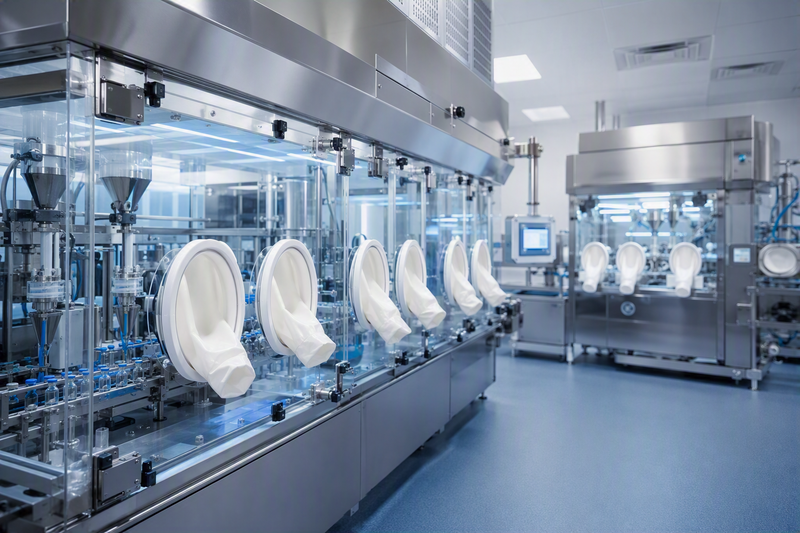
The selection of a barrier technology does not respond solely to operational or design criteria. The publication of the new version of Annex 1 of the European GMP has reinforced a risk management based approach and in the comprehensive pollution control, placing RABS and isolators as fundamental elements to maintain the state of control in sterile manufacturing.
In this context, the implementation of these technologies must be approached considering aspects regulatory, microbiological and of validation throughout the entire life cycle of the installation.
RABS and isolators in the CCS strategy
Annex 1 states that manufacturers must have a Contamination Control Strategy (CCS) documented that integrates all controls aimed at preventing microbiological, particulate and endotoxin contamination.
Within this strategy, barrier systems constitute one of the more effective technical measures to minimize the risk associated with the human factor.
Your selection must be justified by an evaluation based on aspects such as:
- Nature of the product.
- Complexity of the process.
- Level of intervention required.
- Environmental monitoring strategy.
- Cleaning and biodecontamination requirements.
- Sterility assurance objectives.
From this perspective, RABS and isolators should be considered strategic pollution control tools and not only process equipment.
Risk Management (QRM) for RABS and Insulator Selection
The principles of Quality Risk Management (QRM), included in ICH Q9, provide the methodological framework to select the most appropriate technology.
The risk assessment allows us to analyze aspects such as:
- Manual interventions.
- Introduction of materials.
- Loss of differential pressure.
- Exceptional openings.
- Decontamination failures.
- Glove integrity.
This analysis facilitates the identification of residual risk associated with each technology and allows justifying the mitigation measures implemented.
Biodecontamination in insulators: validation of VHP cycles
One of the most relevant aspects of modern isolators is the incorporation of automated biodecontamination cycles.
Currently, the most used solution is vaporized hydrogen peroxide (VHP), capable of providing reproducible microbiological reductions on the internal surfaces of the system.
The validation of these cycles constitutes a critical requirement from a GMP perspective.
| Development and characterization of the biodecontamination cycle | Includes:
|
| Vaporized Hydrogen Peroxide (VHP) Distribution Studies | Verification that the decontaminating agent reaches all areas of the insulator evenly. |
| Mapping of critical points on insulators | Evaluation of:
|
| Microbiological validation using biological indicators | Use of resistant spores to demonstrate the microbiological effectiveness of the process through previously defined logarithmic reductions. |
Qualification and validation of RABS and insulators according to GMP
Implementation of RABS or isolators requires a lifecycle-based qualification strategy:
| Design qualification (DQ) | Verification of:
|
| Installation qualification (IQ) | Documentary confirmation of:
|
| Operational qualification (OQ) | Evaluation of:
|
| Performance Qualification (PQ) | Demonstration of operation under routine conditions through:
|
Glove Integrity: Critical Control Attribute
In both RABS and isolators, gloves are an essential element to maintain separation between the operator and the critical environment.
For this reason, Annex 1 emphasizes the need to establish robust programs integrity verification that includes:
- Automatic pressure tests.
- Leak tests.
- Verifications before and after each campaign.
- Documented management of results.
Glove integrity should be considered a critical parameter within the overall contamination control strategy.
Impact of Annex 1 on the choice between RABS and insulators
The update of Annex 1 has consolidated the trend towards technologies that minimize human interaction with the product.
Although the regulations do not require the use of isolators, they recognize that they provide a higher level of microbiological control and facilitate the maintenance of the control state during manufacturing.
For this reason, numerous new generation installations are opting for solutions based on insulators, especially for biological products, high value medications and advanced therapies.
Conclusion
The implementation of barrier systems should be understood as part of a comprehensive pollution control strategy based on risk management. In this context, the combination of CCS, QRM, robust validation, continuous monitoring and advanced biodecontamination technologies makes it possible to reinforce the guarantee of sterility and respond to current regulatory expectations.
Isolators have established themselves as the technological reference for modern sterile manufacturing, not only for their operational performance, but also for their ability to be effectively integrated into organizations' quality and GMP compliance programs.
Are you evaluating the implementation of a new sterile line or the upgrade of an existing facility? We can help you to design a strategy aligned with the requirements of Annex 1, minimizing risks and facilitating preparation for regulatory inspections.