
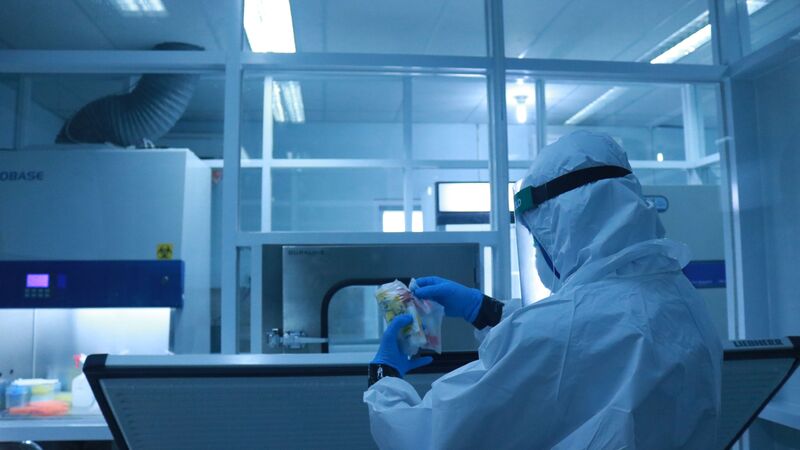
Clean rooms are a critical element in pharmaceutical, biotechnology and healthcare facilities, as they provide a controlled environment capable of minimizing contamination risks that may affect product quality, patient safety and compliance with regulatory requirements. To ensure that a clean room is suitable for its intended use, it is necessary to carry out a structured qualification process that covers all stages of the facility's life cycle, from conception to routine operation.
The qualification of a clean room usually follows the approach based on the phases of Design Qualification (DQ), Installation Qualification (IQ), Operational Qualification (OQ) y Performance Qualification (PQ), in line with the recommendations of GMP, ISPE and ISO 14644 standards.
Design Qualification (DQ): How to verify that your clean room design meets GMP requirements
The DQ aims to demonstrate documentary evidence that the proposed design meets the user requirements (URS), las regulatory requirements and the process needs productive.
During this phase, aspects such as:
- Required environmental classification.
- Flows of personnel, materials and waste.
- Cross contamination containment and prevention strategy.
- Air treatment system (HVAC).
- Number of air changes per hour.
- Pressure differentials between areas.
- Design temperature and relative humidity.
- Location of sampling points and environmental monitoring.
- Construction materials and finishes.
The correct execution of the DQ allows deviations to be identified before the construction of the facility, reducing costs and avoiding subsequent modifications.
Installation Qualification (IQ) – clean room installation verification
The IQ verifies and documents that all clean room elements have been installed in accordance with the approved plans, las specs design and the recommendations from the manufacturers.
Typical activities include:
- Verification of “as-built” plans.
- Inspection of walls, ceilings and floors.
- Checking installed HEPA/ULPA filters.
- HVAC equipment verification.
- Confirmation of sensors and monitoring instruments.
- Review of materials and components certificates.
- Identification and calibration of critical instruments.
- Verification of technical documentation and manuals.
As a result, objective evidence is generated that the physical installation corresponds to the previously approved design.
Operational Qualification (OQ): operational testing of a clean room
The purpose of the OQ is to demonstrate that the clean room works correctly within established operating ranges.
At this stage, functional tests are carried out such as:
- HEPA filter integrity test (Leak Test).
- Measurement of air flows.
- Determination of air velocities.
- Verification of renewals per hour.
- Checking pressure differentials.
- Temperature and humidity mapping.
- Recovery trials.
- Verification of alarms and interlocks.
- Airflow visualization studies using smoke (Airflow Visualization).
- Training of user and maintenance personnel of the installation.
- Maintenance / Calibration Plans.
The tests are generally carried out in state at-rest and allow confirming that the HVAC system and associated elements operate according to the defined specifications.
Performance Qualification (PQ): Demonstration of clean room performance under real-world conditions
The PQ constitutes the final evidence that the clean room is capable of maintain reproducibly the conditions required during normal use.
This phase includes:
- Classification of non-viable particles.
- Environmental microbiological monitoring.
- Tests in operating conditions (“in operation”).
- Verification of behavior against real workloads.
- Evaluation of routine production activities.
- Confirmation of compliance with established classification limits.
The PQ demonstrates that the facility, HVAC system, operating procedures, and personnel act together to maintain the cleanroom control state during manufacturing.
Practical example of qualification of a sterile manufacturing clean room
To illustrate the application of the different qualification phases, a simplified example is presented corresponding to a clean room classified as Grade B (ISO 5 at rest for associated critical zone and ISO 7 background) intended for the preparation of sterile medications.
| Phase | Aim | Activities carried out | Evidence generated |
| DQ | Verify that the design meets user and GMP requirements. | URS review, HVAC design, pressure cascade, environmental classification, personnel and material flows. | Approved DQ report and URS-Design traceability. |
| IQ | Confirm that the installation has been carried out according to design. | Verification of HEPA filters, air treatment units, instruments, sanitary finishes and “as-built” plans. | IQ protocols executed and deviation list closed. |
| OQ | Demonstrate the correct operation of the installation. | HEPA filter integrity, air flow and velocity measurements, pressure differentials, temperature, humidity and recovery tests. | Test reports and acceptance criteria met. |
| PQ | Verify performance in real operating conditions. | Particle counting in operation, microbiological monitoring, simulation of routine activities and evaluation of environmental trends. | Final classification report and authorization for productive use. |
Results obtained and acceptance criteria
After completing the qualification phases, the installation demonstrated:
- Compliance with the particle limits established for the required classification.
- Stable maintenance of pressure differentials between clean areas and lower classification areas.
- Recovery of environmental conditions within specified times after a controlled disturbance.
- Absence of critical deviations during microbiological and performance studies.
- Approval for release and routine use in manufacturing activities.
This example shows how each qualification stage provides specific evidence which, together, demonstrate that the clean room is suitable for its intended use and maintains a state of control in accordance with GMP requirements and regulatory expectations.
Clean room requalification: frequency, requirements and change management
The qualification does not end with the approval of the PQ. Clean rooms, like any critical facility, must undergo a continuous review program that includes environmental monitoring, Preventive Maintenance, change management and requalifications periodic.
The frequency of requalification will depend on the area classification, regulatory requirements, historical results and risk analysis. Any significant modifications to the facility, HVAC system or operations must be evaluated through change control to determine the need for a total or partial requalification.
Conclusion
Cleanroom qualification from DQ to PQ provides documented evidence that the facility has been appropriately designed, built to specifications, operates within defined parameters and maintains its performance during routine use. This life cycle approach constitutes a fundamental tool to ensure GMP compliance, guarantee the product quality and minimize risks of pollution in pharmaceutical and biotechnology environments.
If you are developing a new facility, expanding production areas or preparing a periodic requalification, having the support of specialists can make the difference between a simple documentary verification and a true guarantee of compliance. Contact our team to evaluate the needs of your project and design a tailored qualification strategy, from DQ to PQ, ensuring that your facilities operate efficiently, safely and in accordance with applicable regulatory requirements.