
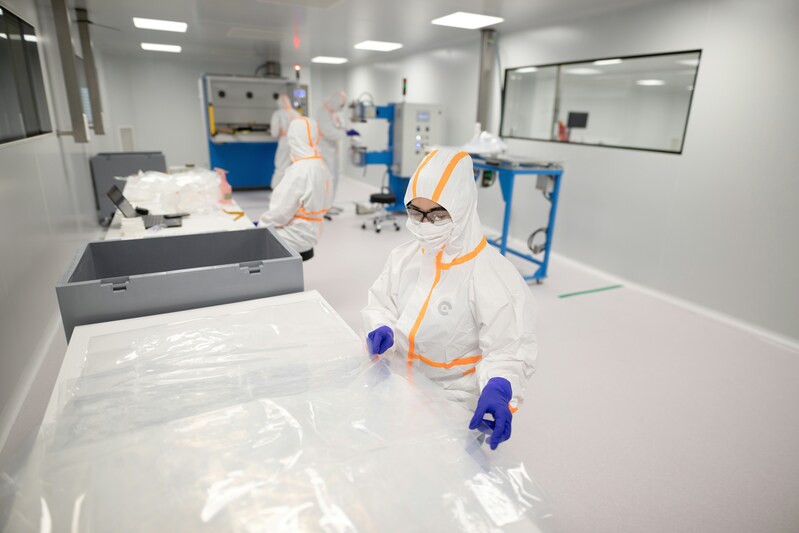
The design of facilities in the pharmaceutical and biotechnology industry has undergone a profound transformation in the last decade, driven by greater regulatory sensitivity towards contamination prevention and the consolidation of the risk management approach as the central axis of GMP compliance. In this context, the Comprehensive Pollution Control (Contamination Control Strategy, CCS) It has become a structural requirement that must be integrated from the initial phases of the design of the facilities and not only addressed as a documentary exercise after the start of the operation.
The CCS represents a holistic vision of contamination control, which goes beyond traditional microbiological control and consistently incorporates the risks associated with particulate, chemical and cross contamination. Its correct translation into the design of facilities allows us to build manufacturing environments robust, defendibles before inspections and aligned with the life cycle of the product.
CCS concept applied to facility design
From a design perspective, The CCS can be understood as the physical and functional materialization of a global risk control strategy.. It is not about adding control elements reactively, but rather about conceiving the installation as a system of successive barriers that prevent the introduction, generation and spread of contaminants.
Design under CCS requires that each architectural decision, constructive and of engineering is justified by a documented risk assessment, consistent with ICH Q9 principles and current regulatory expectations. In this way, design ceases to be a purely technical exercise and becomes an active quality assurance tool.
Key design principles under CCS
1. Risk-based design
The CCS approach forces us to abandon generic or legacy designs and adopt an explicitly risk-based approach. He product type, he degree of exposure to the environment, the process complexity and the severity of impact potential on the patient directly determines the level of control required. As a consequence, the design of the installation must be proportional to the real risk, avoiding both insufficient solutions and over-engineering that is difficult to keep in operation.
This principle allows resources to be optimized and, at the same time, reinforce coherence between the design of the facility, the production process and the global quality strategy.
2. Zoning and flows as primary barriers
The correct definition of zones and flows constitutes one of the most effective barriers within the CCS, since it acts as a passively and continuously against contamination. At this point, it is essential to pay attention to the following aspects:
- Physical and functional separation of personnel, materials, product and waste flows.
- Definition of cleaning and pressure gradients according to the risk of the process.
- Minimization of crossings, returns and ambiguous trajectories.
- Design of personnel and material locks with functionalities proportional to the level of control required.
A well-zoned design significantly reduces dependence on human behavior and administrative controls, reinforcing the robustness of the system.
3. Environmental control and HVAC systems
The HVAC system plays a central role within the CCS and must be conceived as an active element of risk control. Beyond achieving a certain environmental class, the design must guarantee the stability of the control state during routine operation and in transient situations.
Area classification, airflow directionality, sweep patterns and pressure differentials must respond to a process-specific risk analysis. Likewise, the design must facilitate the monitoring continues, he maintenance and the responsiveness to deviations, avoiding excessively complex or fragile configurations.
4. Design of surfaces and construction materials
Facility surfaces constitute a critical element in preventing contamination. From the point of view of the CCS, the design must favor continuous finishes, easily cleanable and compatible with the intended cleaning and disinfection agents. The selection of materials and construction details must minimize the generation of particles and eliminate areas that are difficult to access or clean.
Proper surface design not only facilitates routine cleaning, but also improves the effectiveness of decontamination operations and reduces the risk of cumulative contamination over time.
5. Integration of equipment and processes
CCS requires early and consistent integration between facility design, process equipment, and operational strategy. The adoption of closed systems, physical barriers such as RABS O insulators, and the correct location of technical areas are decisions that must be made in a coordinated manner to avoid unnecessary interventions in classified areas.
This integrated approach reduces product exposure, limits sources of contamination, and improves maintainability without compromising control status.
Relationship between design elements and CCS objectives
The following table summarizes how the main elements of facility design contribute to the objectives of Comprehensive Pollution Control:
| Design element | Objective within the CCS | Impact on control status |
| Zoning and flows | Prevention of cross and environmental contamination | Reducing dependence on human behavior |
| HVAC and pressures | Particle control and microbiology | Environmental stability and reproducibility |
| Surfaces and finishes | Facilitate cleaning and disinfection | Reduction in the risk of residual contamination |
| Team integration | Minimize product exposure | Greater robustness of the process |
| Technical accessibility | Allow controlled maintenance | Continuity of control state |
Design for lifecycle and verifiability
A CCS-aligned design must be defensible not only in the qualification phase, but throughout the entire life cycle of the installation. The ease of performing environmental monitoring, managing changes, and periodically reviewing the control strategy is a key attribute of the design. The installation must allow continually demonstrate that the state of control is maintained, based on objective data and trends, and not only on initial design assumptions.
Conclusions
Comprehensive Pollution Control has established itself as a guiding principle in the design of modern pharmaceutical facilities. Integrating the CCS from the conceptual phases of the project allows for the development of more coherent, robust facilities aligned with current regulatory expectations, reducing deviations, rework and operational dependencies.
Design under CCS reinforces product quality assurance and places patient protection at the center of decision-making, transforming the installation into a true preventive barrier against contamination.
If your organization is faced with the design, expansion or adaptation of facilities in a regulated environment, having a solid CCS approach from the beginning is key to ensuring the success of the project. Our team accompanies companies in the definition and implementation of CCS strategies integrated into the design of facilities, aligned with the real risk of the process and current regulatory expectations. Contact us It is the first step to evaluate your situation, identify opportunities for improvement and transform the CCS into a technical and operational advantage for your present and future projects.