
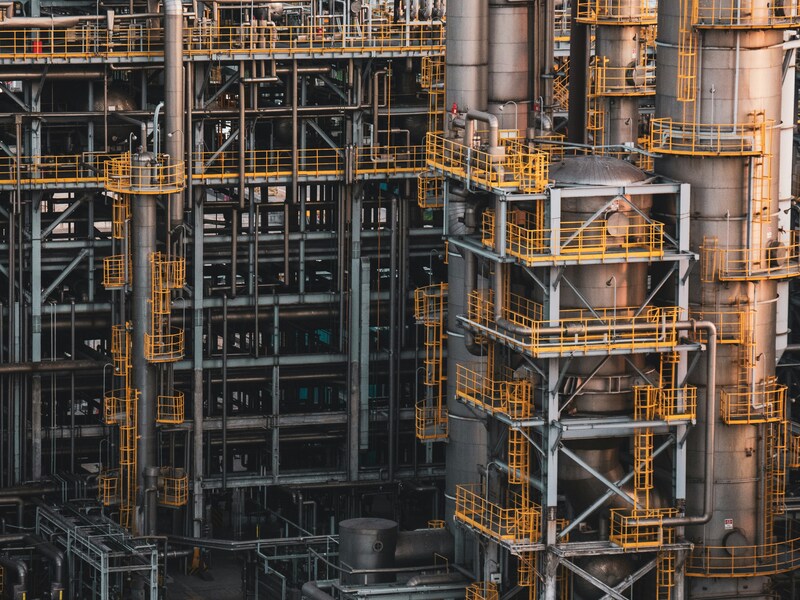
The design of chemical facilities constitutes one of the most complex activities within industrial engineering due to the nature of the products managed, processes involved and risks potential partners. A poorly designed chemical facility can lead to serious accidents that affect people, the environment, operational continuity and the reputation of the organization. Therefore, security must integrate from the conceptual stages of the project and remain a fundamental criterion throughout the entire life cycle of the installation.
The modern safe design philosophy is based on the concept of “inherent security“, which seeks to eliminate or reduce hazards at their source before resorting to additional protective measures or administrative controls.
Identification and evaluation of risks in chemical plants
The first step in ensuring the safety of a chemical facility is to carry out a thorough identification of the hazards associated with the processes, chemicals and operating conditions.
Among the most common risks are:
- Fires and explosions.
- Leakage of toxic substances.
- Chemical reactions out of control.
- Overpressures in equipment and pipes.
- Polluting emissions to the environment.
- Exposure of personnel to hazardous chemical agents.
To analyze these dangers, internationally recognized methodologies are used, including:
- HAZID (Hazard Identification).
- HAZOP (Hazard and Operability Study).
- What If Analysis.
- Quantitative Risk Analysis (QRA).
- FMEA (Failure Mode and Effects Analysis).
The systematic application of these tools allows us to identify accidental scenarios and establish preventive measures suitable.
Inherent safety principles applied to chemical engineering
Inherent safety seeks to minimize risks through design decisions that reduce the danger of the process. The four principles son:
| Minimization | It consists of reducing the quantities of dangerous substances stored or processed.
Examples:
· Implement continuous production instead of mass storage. |
| Substitution | It involves replacing hazardous materials or processes with safer alternatives.
Examples:
|
| Moderation | It consists of operating under less severe conditions.
Examples:
· |
| Simplification | It seeks to eliminate unnecessary complexities that may encourage human errors or operational failures.
Examples:
· Automation of critical operations |
Plant layout design to improve industrial safety
The physical layout of the equipment plays a determining role in the overall safety of the installation. The design must consider adequate distances between process areas, storage tanks, administrative buildings and auxiliary service systems. This segregation limits the spread of fires, explosions or releases of hazardous substances.
Likewise, it is essential guarantee evacuation routes clearly marked and adequate access for emergency teams. The ease of intervention can be decisive in minimizing the consequences of an incident.
Safety in equipment, pipelines and chemical process systems
Process equipment must be designed to withstand all anticipated operating conditions, including abnormal or transient situations. Reactors, pressure vessels, heat exchangers and piping systems must comply with applicable design codes and have overpressure protection mechanisms.
Another fundamental aspect is the selection of materials. Chemical compatibility and corrosion resistance are key factors in avoiding leaks, premature degradation and structural failure. Likewise, the incorporation of secondary containment systems allows you to limit the consequences of possible spills or product losses.
Instrumentation and control systems for process safety
Industrial automation has represented a significant advance in process risk management. Security instrumented systems allow detecting abnormal conditions and execute automatic actions intended to bring the facility to a safe state. These functions may include emergency shutdown of equipment, closing of critical valves, or controlled depressurization of certain systems.
Continuous monitoring of variables such as pressure, temperature, level O gas concentration provides essential information to prevent incidents and optimize response to emergency situations.
Protection against fires and explosions in chemical installations
Fires and explosions constitute some of the most important risks in chemical facilities due to the handling of flammable substances, fuels O likely to generate explosive atmospheres. Therefore, the design of the plant must consider preventive measures that reduce the probability of these events occurring, as well as protection systems capable of limiting their consequences in the event of an incident. The correct identification of hazards, the control of ignition sources and the implementation of adequate detection and extinction systems are fundamental aspects to guarantee the safety of people, facilities and the environment.
Depending on their purpose, the applicable safety measures can be classified into prevention measures, fire protection systems and specific solutions for explosion mitigation:
| Prevention | Preventive measures include:
|
| Protection Systems | Depending on the risk, the following can be installed:
|
| Protection Against Explosions | The most common strategies include:
· Certified equipment for explosive atmospheres. |
| Human Factors and Ergonomics | A high percentage of industrial incidents are related to human errors.
Therefore, the design must facilitate safe operation through:
Likewise, situations that favor errors such as fatigue, operational overload or confusion in equipment identification must be minimized. |
| Emergency Management | From the design phase it is necessary to consider possible emergency scenarios.
The installation must have:
Proper preparation can significantly reduce the consequences of an incident. |
Regulations and legal requirements for the safety of chemical facilities
The design and operation of chemical facilities in Spain must comply with various legal requirements aimed at preventing accidents, protecting workers and minimizing environmental impacts. Among the most relevant regulations are:
- Royal Decree 656/2017 (Chemical Products Storage Regulation, APQ): establishes the design, construction and operation requirements for the safe storage of hazardous chemicals.
- Royal Decree 840/2015 (Serious Accidents – Seveso III): regulates facilities that handle significant quantities of dangerous substances and requires safety management systems, risk assessments and emergency plans.
- Royal Decree 681/2003 (ATEX): establishes the minimum measures to protect workers against explosive atmospheres and requires the classification of areas at risk of explosion.
- Pressure Equipment Regulations (REP): regulates the design, installation, inspection and maintenance of equipment under pressure, such as reactors, vessels and pipes.
- Law 31/1995 on Occupational Risk Prevention: establishes general obligations to guarantee the safety and health of workers during the operation of the facility.
- Law 7/2022 on Waste and Contaminated Soils for a Circular Economy: defines the requirements for the safe management of industrial waste and environmental protection.
In addition to national legislation, it is common to apply reference technical standards such as ASME, API, NFPA e IEC 61511, which provide widely accepted design criteria for process equipment, fire protection, and safety instrumented systems.
Integrating these requirements from the initial engineering phases allows us to guarantee the legal compliance, reduce operational risks and improve global security of the installation throughout its life cycle.
Conclusions
Safety in the design of chemical facilities must be addressed comprehensively, considering both the technological aspects like the organizational and humans. The early identification of risks, the application of inherent safety principles, the incorporation of instrumented protection systems and compliance with current regulations can significantly reduce the probability and consequences of serious incidents.
In an increasingly complex and regulated industrial environment, safety is no longer an additional requirement but an essential element of the design, operation and sustainability of any modern chemical facility.. Safe design not only protects people and the environment, but also contributes to improve operational reliability, the business continuity and the competitiveness of the organization.
Do you want to delve deeper into the safety of chemical processes? Contact our team and receive personalized advice to optimize the design and risk management of your facilities.