
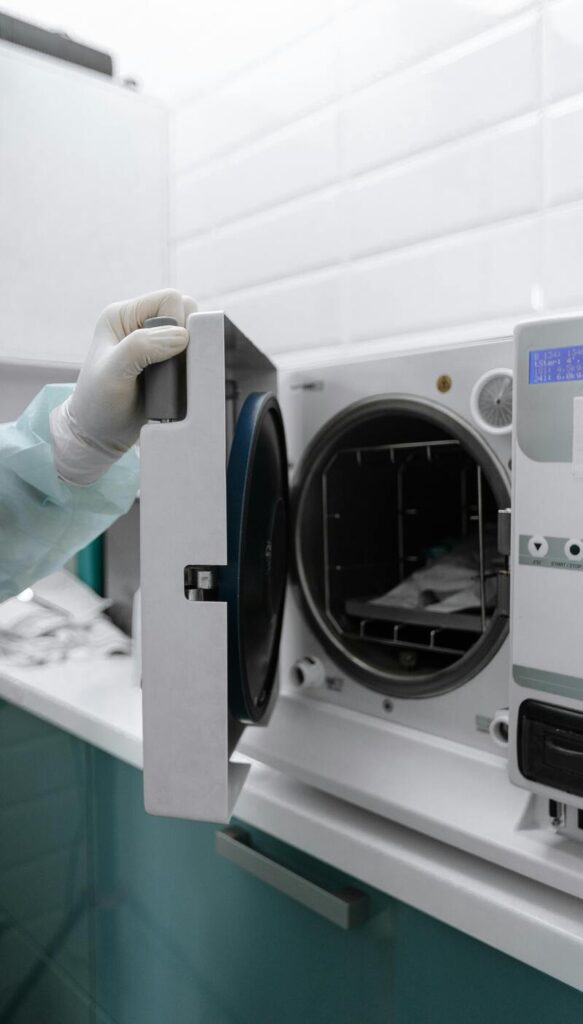
Sterilization is a fundamental pillar in the manufacture of pharmaceutical, biopharmaceutical products and medical devices, being a critical step to guarantee patient safety and product integrity.
This guide deepens the various methods of sterilization, both physical and chemical, which are used to eliminate or destroy all microbial life forms, including highly resistant spores. Its differentiated application is addressed in Final products, production equipment and controlled environments, like white rooms. The rigorous validation of each sterilization process, backed by thorough monitoring and compliance with strict regulations such as good manufacturing practices (GMP) and Annex 1 of the EU GMP, is indispensable to ensure consistent quality. In addition, emerging innovations and trends are explored that are transforming sterilization practices, seeking greater efficiency, sustainability and compatibility with thermosensitive materials.
1. Introduction to sterilization in the pharmaceutical industry
1.1. Definition and fundamental principles of sterilization
Sterilization is defined as the process by which the elimination or complete destruction of all forms of microbial life is achieved, including bacteria, viruses, fungi and, crucially, their spores, which are the most resistant forms of microorganisms. This level of microbial eradication is absolute and distinguishes to sterilization of other microbial control processes.
It is essential to differentiate sterilization from disinfection and the antisepsis. And disinfectant It is an agent designed to eliminate total microbial load on inanimate surfaces, such as rooms or equipment, but not necessarily eradicate all spores. On the other hand, a antiseptic It is an externally applied agent on living tissues (skin or mucous member) to control and reduce the presence of potentially pathogenic microorganisms.
The quantitative difference is significant: while disinfection seeks a reduction in the initial microbial presence of 3 to 5 logarithms, sterilization requires a minimum reduction of 6 logarithms, which implies greater lethality and a higher microbiological safety level. This distinction is critical because a sterile pharmaceutical product It must be completely free of viable microorganisms To avoid risks of patient infection, especially in the case of parenteral products or those that come into direct contact with internal tissues.
1.2. Critical importance of sterilization in drug manufacturing
Sterilization is a key stage in the pharmaceutical and biopharmaceutical manufacturing process. Its importance lies in the necessary need to ensure that products are safe for use, eliminating any bacteria or microorganism that can compromise the quality of the product and consumer health.
The validation of sterilization processes not only prevents pollution and reduces the risk of infections, but also ensures compliance with strict regulatory regulations and contributes to the general quality guarantee of the product. A validated sterilization process means that it has been demonstrated, through rigorous evidence and documentation, which The method is consistently capable of eliminating all the viable microorganisms of a product or surface.
2. Classification of sterilization methods
Sterilization methods used in the pharmaceutical industry are mainly classified into two categories, depending on the nature of the agent used: physical and chemicals.
2.1. Physical methods
Physical sterilization methods are based on the application of energy or mechanical separation of microorganisms.
2.1.1. Heat sterilization
Heat is a highly effective sterilizing agent, since all microorganisms are susceptible to their action to a different degree. Heat causes protein denaturation, the fusion and disorganization of cell membranes, and/or irreversible oxidative processes in microorganisms, which leads to their inactivation and death. The effectiveness of heat as a method of sterilization depends on the temperature and exposure time.
2.1.1. Wet heat (autoclave)
Wet heat sterilization, commonly made in autoclaves, is the method more used and preferred in the pharmaceutical industry Due to its high efficiency, speed and economy.
| Mechanism of action | The autoclave uses high pressure steam and wet heat to eliminate microorganisms. Pressing saturated steam penetrates microbial cells and causes the irreversible coagulation of their proteins, inactivating germs effectively. |
| Operational parameters | The autoclaves usually operate at temperatures between 121 ° C and 134 ° C, maintaining high pressures (generally between 1 and 2 bar) for periods of 15 to 30 mints. |
| Applications | This method is essential to sterilize medical instruments (syringes, scalpels, ampoules), glass material (flasks, pipettes), culture media and certain liquid pharmaceutical products. It is also used for large and small parenteral products, and ophthalmic products. |
Table 1. Keys in humid heat sterilization
2.1.1. Dry heat (stove or oven)
Dry heat sterility It is achieved by high air temperatures.
| Mechanism of action | It is based on the oxidation of cell components to inactivate germs. |
| Operational parameters | It requires higher temperatures (normally between 160 ° C and 190 ° C) and longer exposure times than wet heat. For example, 1 hour is needed at 170 ° C or 2 hours at 160 ° C. At 140 ° C at least 5 hours of exposure are required. |
| Applications | It is ideal for materials that can support high temperatures without degrading, such as glassware, metal instruments, powders and non -volatile non -volatile or viscous substances. It is widely used to sterilize metals and mirrors, since they do not oxidize or corrode and the sharp edges do not lose edge. |
Table 2. Keys in dry heat sterilization (stove or oven)
2.1.2. Radiation
Radiation sterilization uses energy to inactivate microorganisms. Its action depends on the type of radiation, the dose and the exposure time.
2.1.2.1. Ionizing radiation (gamma, beta, x -rays)
Ionizing radiation (gamma, beta and x -rays) have bactericidal properties, killing germs and neutralizing other harmful organisms.
| Mechanism of action | They deactivate microorganisms very efficiently by destroying, inactivating or reducing microorganisms in solid or liquid materials without generating heat. The main lethality mechanism of nitrogen dioxide (NO2), an emerging technology is DNA degradation. |
| Applications | They are commonly used to sterilize food, medicines, laboratory equipment, blood, fabrics and health materials. They are suitable for thermosensitive products, such as pre -cledged syringes and health devices that do not support high temperatures. They are also used for lyophilized products, dry powder, pre -scoring devices, nanosuspensions and active pharmaceutical ingredients (API). |
Table 3. Keys in sterilization by ionizing radiation (gamma, beta, X -rays)
2.1.2.2. Ultraviolet Radiation (UV)
| Mechanism of action | UV radiation injures the cell membrane of microorganisms and denatures cell protein. |
| Applications | It is mainly used for the disinfection of surfaces and air, but its low penetration limits its use for the deep sterilization of materials. |
Table 4. Keys in ultraviolet radiation sterilization (UV)
2.1.3. Filtration
Filtration is a mechanical method that allows the separation of microorganisms from a liquid or gas substance.
| Mechanism of action | It consists of the physical elimination of microorganisms present in a fluid by passing through filters with very small pores. |
| Applications | It is crucial for the sterilization of liquids and gases that are sensitive to heat or chemical agents, such as injectable solutions, culture and air means for clean rooms. |
Table 5. Keys in filtration sterilization
2.2. Chemical methods
Chemical sterilization methods use Chemical agents to inactivate or destroy microorganisms.
2.2.1. Ethylene oxide (OE)
Ethylene oxide is a chemical agent widely used for the sterilization of thermosensitive materials.
| Mechanism of action | It is a rented agent that acts on proteins and other cell components, causing an irreversible modification of enzymes and inhibiting enzymatic activity. It joins compounds with labile hydrogens, such as carboxyle, amino, sulfhydrils and hydroxyl groups. |
| Applications | It is used in gas sterilization, especially in the pharmaceutical industry, for materials such as disposable, plastics, electronic equipment and cardiorespiratory pumps. It is a cold sterilization method. It is also used for the external sterilization of syringes, blisters or prellenated cartridges, ensuring that the OE does not reach the pharmaceutical product. |
Table 6. Keys in ethylene oxide sterilization (EO)
2.2.2. Aldehydos (gluteraldehyde and formaldehyde)
Aldehydos are rented agents that act on proteins, causing the irreversible modification of enzymes and inhibiting enzymatic activity.
- Glutaraldehyde: It is the only cold cold sterilizer.
- Formaldehyde: In gas form, it is used to decontaminate buildings and environments. It is obtained by heating paraformaldehyde.
- Advantages: They destroy spores.
- Disadvantages: The formaldehyde is very irritating and loses activity in refrigerated environments.
2.2.3. Hydrogen peroxide (H2O2) Gaseous
Hydrogen peroxide is an oxidizing agent that modifies the functional groups of nucleic proteins and acids.
| Mechanism of action | Inactive proteins and enzymes for oxidation of groups -sh a s -s, and can attack amino and nature groups. |
| Applications | Currently, gaseous hydrogen peroxide is used as a disinfectant of surfaces or decontaminating biological structures. |
Table 7. Keys in Hydrogen Peroxide Sterilization (H2O2) Gaseous
2.2.4. Other chemical agents
- Alcoholes (Etanol e Isopropanol): They are used in concentrations from 50 % to 70 %. They injure the cell membrane of microorganisms and denaturalize protein. They do not destroy spores and have a slow germicidal action.
- Iodine: It is an oxidizing agent that modifies the functional groups of protein and nucleic acids. It is effective against spores in a concentration of 1600 ppm of free iodine. It is used as a skin disinfectant.
- Chlorine, hypochlorites and chloraminas: They are disinfectants that act on proteins and nucleic acids of microorganisms. They oxidize groups and attack aming groups, nature and the phenol of tyrosine.
This content is an extract of our complete guide. If you want to access the full document with all the technical and practical details, request it through our form And we will send it to you directly.