
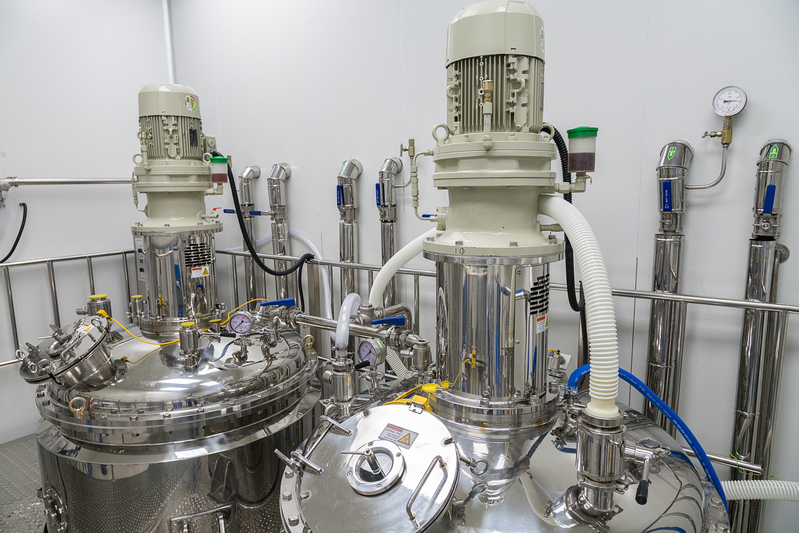
The deregistration of GMP (Good Manufacturing Practices) equipment is the formal, documented process for removing equipment from productive use, ensuring that it does not negatively affect the quality of the products or the integrity of the data.
However, in practice, a poorly managed recall can become a critical point in audits, especially when there are questions about traceability, calibration status or the integrity of historical data.
Unlike conventional equipment, equipment in a regulated environment (pharmaceutical, food or cosmetic) requires a closure of its life cycle that guarantees traceability. It's not just about turning off the machine.; is to ensure that, until its last second of operational life, the equipment met quality standards and that it does not leave “loose ends” that could compromise previous batches.
The removal of equipment shall include a detailed decommissioning plan/strategy, considering technical, quality and HSE aspects.
Change Control
This is the legal umbrella that covers the entire process. Change Control is the first step of the process and must document:
| Impact assessment | What processes are affected? Where will production move to? |
| Documentation update | Master list of equipment, calibration inventories, preventive maintenance plans and standard operating procedures (SOPs). |
At this point, one of the most common mistakes is to underestimate the scope of the change, especially when the equipment is linked to validated processes or computerized systems.
Below are the key points to manage this process.
1. Impact and risk assessment
Before removing equipment, it is essential to determine if its output affects validated processes it exists risk of cross contamination during dismantling. This evaluation is not only technical: it also involves:
- review the documentation,
- consider the continuity of production and
- ensure that all safety and quality measures are taken into account.
Identifying risks in this phase allows you to plan corrective actions before operational or regulatory problems arise.
2. “End of Life” Calibrations (Post-operation Calibration)
Before dismantling or removing equipment, it is vital to perform a output calibration. This serves to verify that, since the last scheduled calibration until today, the instruments did not suffer drifts (drifts).
| Impact | If an instrument fails this last calibration, an investigation must be opened to assess whether batches produced since the last “good” calibration are at risk. |
| Record | A final certificate is issued and attached to the team's closure file. |
This point is especially sensitive in inspections, since it directly connects with confidence in historical data.
3. Maintenance and cleaning review
You must ensure that the equipment history is complete and closed.
- Preventive maintenance: Verify that all work orders (OT) are closed. If there was any pending, it must be canceled justifying that the equipment goes out of service.
- Final cleaning and decontamination: Carry out a deep final cleaning so that the equipment is left in a safe and clean state, eliminating any residue of product, active ingredient or biological agent. This must be duly certified.
4. Reconciliation of Deviations and CAPA
A team cannot cancel if it has “open wounds” in the quality system.
- Deviations: Check that all deviations associated with the equipment are closed or that their closure does not depend on the operation of the machine.
- LAYERS: If the equipment was part of a corrective action (for example, a pending design improvement), that LAYER should be updated or closed indicating decommissioning of the asset.
In practice, this is another critical point in auditing, where the coherence between the state of the equipment and the quality system is reviewed.
5. Computerized Systems
- Data history: If the equipment was connected to a network or generated electronic records (CFR 21 Part 11), backup and integrity of historical data must be ensured.
- Removal of end user access (or restriction to read-only status).
Here, failures are usually associated with incomplete file management or accesses that remain active after removal.
6. File relevant documentation
Even if the machine is gone, its data must be preserved. System documentation, maintenance log, audits, logbooks, etc., must be archived and available during the period of time established by the global / local archiving SOPs.
- Historical Record: Close the equipment logbook, indicating the date and reason for deregistration.
- Inventory: Update the master list of plant equipment.
7. Engineering and Maintenance database update
Even if the equipment is physically removed, its data must be preserved. The historical record, logbooks, maintenance reports and audits must be archived according to local or global SOPs. Updating the master equipment list ensures that plant information is aligned with operational and regulatory reality.
| Engineering File | Plans such as P&ID, Layouts, etc. must be updated. in which the retired team appears. |
| Maintenance File | The equipment and its maintenance plans must be removed from the plant's database (SAP, etc.) and from the Calibration Plan. Stored spare parts can also be removed. |
8. Data migration and archiving
Ensure that all data generated by the equipment (especially if it is electronic) has been properly archived or migrated before it is disconnected. This ensures that the standards of Data Integrity and that historical information is available for subsequent audits or reviews.
9. Equipment labeling update.
Remove “Qualified” or “In Use” labels and place a clear label of “EQUIPMENT OUT OF SERVICE” O “ WITHDRAWN ” to avoid accidental use. It is a simple step, but critical for security and the prevention of operational errors.
10. Physical dismantling
Finally, disconnection of supplies such as electricity, compressed air or purified water must be done following safety and maintenance procedures. This completes the life cycle of the equipment in a safe and controlled manner.
Conclusion
The retirement of GMP equipment is another phase within the validated life cycle and should not be taken lightly. Managing it correctly protects the integrity of the processes and demonstrates the maturity of the quality system in the face of audits and inspections.
If you want to ensure that your deregistration procedures comply with GMP standards and protect the integrity of your data, contact us for a complete review of your processes.