
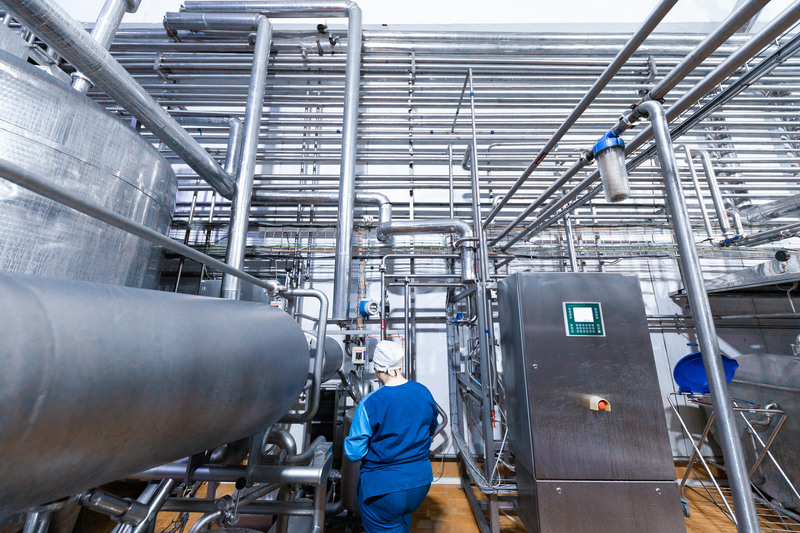
Over the past decade, artificial intelligence in the process industry has gone through a phase of experimental enthusiasm characterized by promising but isolated proofs of concept. Predictive models that worked in the laboratory, algorithms capable of detecting anomalies in impeccable historical datasets, sophisticated dashboards that were rarely integrated into the plant's operational routine. The problem was never the mathematical capacity of the models, but rather their inability to integrate into real industrial architectures.
That cycle is changing.
PMMI's latest sector report confirms a clear trend: investment in advanced analytics and intelligent automation solutions is migrating from exploratory initiatives towards integrated deployments in machinery, production lines and corporate systems. However, the real change is not budgetary; It is structural. AI stops being a peripheral analytical layer and becomes a component of the production system.
For engineering and operations technical profiles, this implies a different question. It is no longer about validating whether a model correctly predicts a failure. It is about determining how that model interacts with PLC, SCADA, MES, ERP and energy systems without compromising stability, security or regulatory compliance.
Ultimately, the question is no longer “Can we apply AI?” sino “How do we integrate it robustly into the production system?”
1. Architecture before algorithm
One of the recurring errors in the first wave of industrial digitalization was overestimate the importance of the algorithm and underestimate the complexity of the architecture. In a real industrial environment, latency, signal quality, time synchronization and interoperability between protocols outweigh the sophistication of the model.
The maturity of edge computing has been a decisive catalyst. The ability to process data in proximity to the machine reduces latencies and avoids unnecessary dependencies on the cloud, something especially critical in continuous processes O critical infrastructure. However, the edge does not solve the structural problem by itself: if the data is not standardized and contextualized, the inference loses operational value.
Industrializing AI means designing an architecture in which the flow of data is governed, versioned and audited. It means that the model has a defined life cycle, with performance monitoring, drift detection and controlled update protocols. This is where the concept of industrial MLOps becomes relevant: not as a terminological fad, but as an engineering discipline applied to models deployed in productive environments.
2. What “Operational AI” really means
For an engineering team, operational AI is not a dashboard with predictions. It is a system that:
- Integrates with PLC/SCADA/MES.
- Consume structured and unstructured data in real time.
- Generate actionable recommendations or execute actions under defined rules.
- It is monitored under an industrial MLOps scheme.
- Meets regulatory and cybersecurity requirements.
That is to say: it is part of the process, it is not observed from the outside.
3. Prescriptive maintenance: from the predictive model to automatic cycle closure
Maintenance has historically been one of the first use cases for advanced analytics in the industry. The evolution from corrective strategies towards predictive models based on analysis of vibration, temperature O harmonic spectra is widely documented. The next step, which is already beginning to be consolidated in mature organizations, is integrated prescriptive maintenance.
In this approach, the model not only estimates the probability of failure, but contextualizes the optimal intervention considering actual asset load, production windows, spare parts availability, and contractual constraints. The value lies not only in anticipating an event, but in close the decision cycle automatically or with structured human validation.
In plants with a high level of digitalization, this type of systems is achieving relevant reductions in unplanned stops. However, the results depend on a factor that is often underestimated: data quality. Uncalibrated sensors, noisy signals, or incomplete historical records introduce biases that no algorithm compensates for. The maxim “garbage in, garbage out” remains an immutable operating law.
Traditional predictive maintenance is based on failure models (vibration analysis, temperature, harmonic spectrum, etc.). The prescriptive leap adds three critical layers:
- Contextualized multivariate correlation
It not only analyzes vibration; crosses it with real load, humidity, operating regime and intervention history. - Optimization under constraints
Consider availability of spare parts, production windows and SLA. - Integration with CMMS/CMMS
Automatically generates work order and prioritization.
In continuous process sectors, mature cases are reporting relevant reductions in unplanned stops, although the results depend strongly on the previous digitalization baseline.
The key is not the algorithm; it is data quality and IT/OT integration.
4. Dynamic production and energy adjustment: real multi-objective optimization
Energy volatility and logistical disruptions have forced planning models to evolve.
An advanced operational AI architecture enables:
- Automatic replanning in the event of energy price variations.
- Adjustment of critical loads in valley windows.
- Simulation of logistics scenarios in almost real time.
- Simultaneous optimization of cost, term and consumption.
However, this capability is only viable when there is real interoperability between ERP, MES and energy management systems. In many plants, this integration remains partial or fragmented. Therefore, talking about an “autonomous supply chain” requires technical prudence: full autonomy is still exceptional; advanced assistance with human supervision is the predominant model.
5. European framework: technical implications of the AI Act
The European regulatory environment introduces requirements that directly impact engineering and operations.
The European Regulation known as AI Act classifies certain industrial systems as “high risk” when they affect critical infrastructure or security.
For technical teams, this means:
- Complete traceability of the model life cycle.
- Structured technical documentation.
- Conformity assessment.
- Risk management and continuous validation.
- Transparency in decision logic.
It's not just regulatory compliance; is an engineering discipline applied to AI models.
In parallel, initiatives such as GAIA-X or EuroHPC Joint Undertaking reflect the drive towards digital sovereignty and secure European infrastructures for industrial data processing.
6. Industrial cybersecurity
The greater the autonomy, the greater the attack surface. An operational AI system connected to multiple layers of the production process becomes a potential vector if it is not protected under a robust security model:
- Strict IT/OT segmentation.
- Zero Trust Architecture.
- Continuous monitoring of anomalous behavior.
- Granular identity and access management.
- Model drift monitoring (MLOps).
Furthermore, the models themselves require monitoring. Statistical drift, changes in operating conditions or alterations in consumption patterns can progressively degrade performance without generating obvious alarms. Without continuous monitoring and periodic recalibration, the system loses reliability and erodes the confidence of the technical team
7. Human factor: augmented engineering, not replaced
The industrialization of AI does not displace the engineer; redefines his role. The operations professional goes from reacting to events to managing recommendation and optimization systems. This requires hybrid competencies: understanding of the physical process and solid notions of data analysis and statistical limitations.
Trust in the model comes not from its mathematical sophistication, but from its transparency, its historical consistency, and the team's ability to understand when to accept or override a recommendation. Without analytical culture, technology is perceived as a black box and generates resistance.
8. What a plant needs to industrialize AI
Before talking about advanced algorithms, an organization should validate:
- Consolidated data architecture.
- Clear data governance.
- ERP–MES–SCADA integration.
- Industrial cybersecurity protocols.
- Model lifecycle strategy (MLOps).
- Alignment with European regulatory requirements.
Without this foundation, any deployment will be another “perpetual pilot.”
Conclusion: Disciplined execution, not technological enthusiasm
Operational AI is not a futuristic trend; It is a natural evolution of industrial automation. But its success does not depend on the most sophisticated algorithm, but on the technical discipline with which it is integrated into the production architecture.
Organizations that understand this will not only gain efficiency; They will gain resilience, traceability and the ability to adapt in an increasingly demanding regulatory and energy environment.
The question is not whether to implement AI, but whether the current plant infrastructure is prepared to absorb it with technical guarantees..